 English
 Bangla
 Arabic





















Details description |
|---|
|
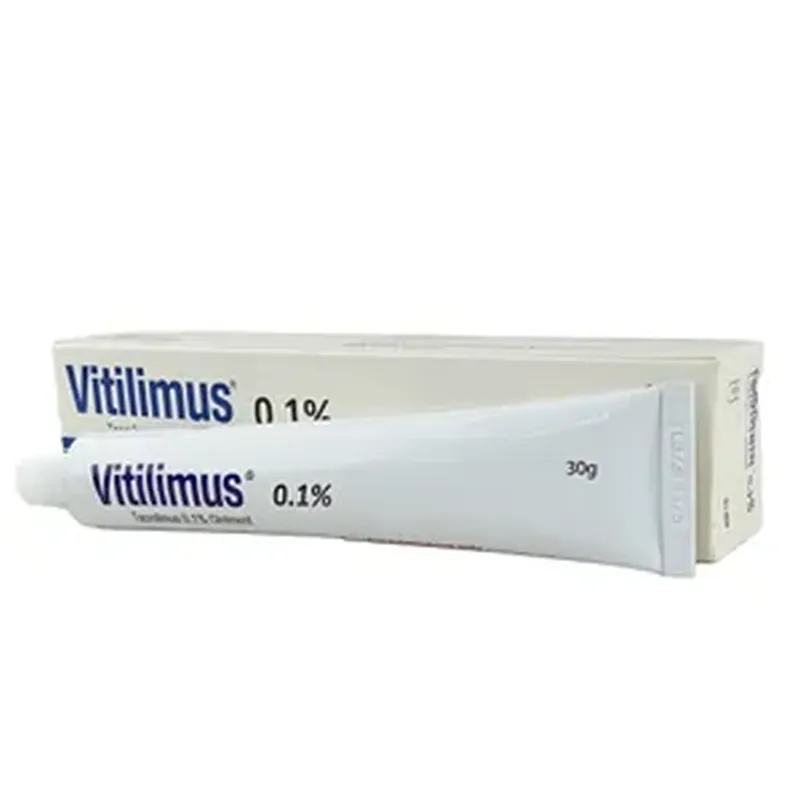
Vitilimus - Ointment
Tacrolimus 0.1%, 0.03% Topical - 0.1%
1 30gm tube(s) / 30gm tube
Unimed Unihealth Pharmaceuticals Ltd.
Introduction: Vitilimus is used to treat eczema (atopic dermatitis). It works by suppressing the activity of certain immune cells that cause inflammation (redness and swelling) of the skin. This relieves itching and improves rashes in atopic dermatitis. Vitilimus is used for external use. It should be used 2-4 times a day on the affected area or use it as suggested by the doctor. It should be applied slowly and evenly to the skin until it is rubbed in. You should not use it too often and you should not cover the treated area with a bandage or plaster. You must inform...
Side effects of Vitilimus: Application site reactions (burning, irritation, itching and redness)
How to use Vitilimus: This medicine is for external use only. Use it in the dose and duration as advised by your doctor. Check the label for directions before use. Clean and dry the affected area and gently massage the ointment.
How Vitilimus works: Vitilimus is an immunosuppressant. It works by suppressing the activity of certain immune cells that cause inflammation (redness and swelling) of the skin. This relieves itching and improves rashes in atopic dermatitis.
What if you forget to take Vitilimus?: If you miss a dose of Vitilimus, take it as soon as possible. However, if it is almost time for your next dose, skip the missed dose and go back to your regular schedule. Do not double the dose.
Indication: Atopic dermatitis, Allergic contact dermatitis, Severe eczema, Psoriasis, Alopecia areata, Pyoderma gangrenosum, Cutaneous lupus erythematosus, Dermatomyositis, Seborrheic dermatitis, Rosacea, Lichen Planus, Pemphigus Vulgaris, Vitiligo, Graft-Versus-Host Disease, Ichthyosis.
Administration: Apply a thin layer of Tacrolim ointment onto the affected skin areas and rub in gently and completely. Treatment should be continued for one week after clearing of signs and symptoms of atopic dermatitis. Tacrolim ointment should not be used with occlusive dressings.
Adult Dose: Topical/Cutaneous Atopic dermatitis Adult: Apply thinly 0.03% or 0.1% ointment to affected area bid. Rub in gently and completely. For short-term and intermittent use only. If no improvement after 6 wk, re-confirm diagnosis.
Child Dose: Topical/Cutaneous Atopic dermatitis 15 years: Apply 0.03% or 0.1% ointment as thin layer to affected area q12hr;
Contraindication: Tacrolimus ointment is contraindicated in patients with a history of hypersensitivity to Tacrolimus or any other component of the preparation.
Mode of Action: Tacrolimus inhibits T-lymphocyte activation, although the exact mechanism of action unclear. Tacrolimus bind to cytosolic receptors known as immunophilins (i.e., cyclophilin and FK binding protein-12 [FKBP-12], respectively), forming complexes that inhibit the production of cytokines via the calcineurin pathway. Inhibition of calcineurin activity inhibits early activation of T-cells (ie.immunosuppresion results).
Precaution: Monitoring of blood trough serum concentrations to prevent organ rejection and to reduce drug-related toxicity. Topical: Used with caution on the face or neck, large areas of the body (not >50% of the total BSA), or areas of broken skin. Infections at the treatment site should be cleared prior to therapy. Delay use in patients with unknown cause of lymphadenopathy or acute infectious mononucleosis till resolution. Use in patients with Netherton's syndrome is not recommended. Pregnancy. Lactation: Not known whether tacrolimus is distributed in milk following topical administration to skin
Side Effect: >10% Burning sensation (43-58%), Pruritus (41-46%), Flu-like symptoms (23-31%), Skin erythema (12-28%), Headache (5-20%)
Interaction: Increased nephrotoxicity with ciclosporin, aminoglycosides, amphotericin B, cisplatin, NSAIDs, vancomycin, co-trimoxazole, aciclovir, ganciclovir. Increased risk of hyperkalemia with potassium-sparing diuretics. Increased plasma concentrations and toxicity with azole antifungals, calcium-channel blockers, cimetidine, danazol, HIV-protease inhibitors, macrolide antibacterials and metoclopramide. Antacids, rifampin, rifabutin, casofungin, phenytoin, phenobarbital and carbamazepine decrease tacrolimus plasma concentrations. Concurrent admin of sirolimus and tacrolimus decrease levels of both.
|

No review yet!



LIVE SHOP
(0)
14680 Products
0%
Positive review