 English
 Bangla
 Arabic






















Details description |
|---|
|
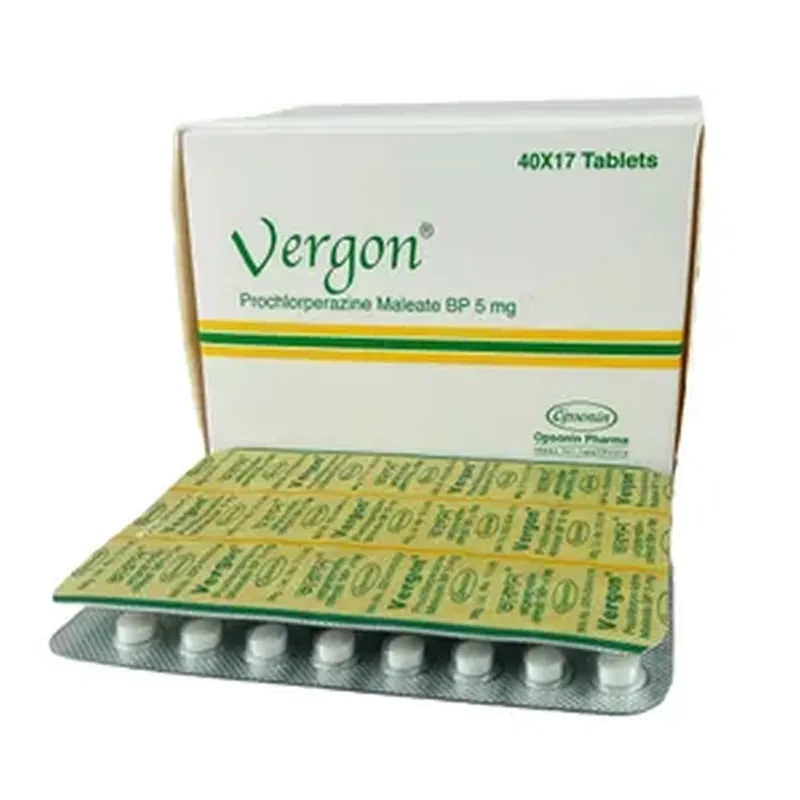
Vergon - Tablet
Prochlorperazine Maleate - 5mg
40 Tablet(s) / Strip
Opsonin Pharma Limited
Introduction: Vergon is used to treat nausea, vomiting and dizziness due to ear diseases (Meniere’s syndrome). This medicine is also used in mental illnesses such as schizophrenia, mania and short term anxiety. Vergon is taken after meals in a dose and duration as advised by the doctor. The dose you are given will depend on your condition and how you respond to the medicine. You should take this medicine until your doctor tells you to stop. Let your doctor know about all other medications you are taking as some may affect, or be affected by this medicine. The most common side...
Uses of Vergon: NauseaVomitingVertigoMeniere's diseaseSchizophrenia
Side effects of Vergon: DrowsinessOrthostatic hypotension (sudden lowering of blood pressure on standing)
How to use Vergon: Take this medicine in the dose and duration as advised by your doctor. Swallow it as a whole. Do not chew, crush or break it. Vergon is to be taken with food.
How Vergon works: Vergon is a dopamine antagonist. It works by blocking the dopamine receptors in the region of brain that controls nausea and vomiting.
Indication: Vertigo, Psychoses, Nausea and vomiting, Severe anxiety disorders
Administration: May be taken with or without food.
Adult Dose: Oral Prophylaxis of nausea and vomitting Adult: As maleate : 5-10 mg bid/tid. Nausea and vomiting Adult: As maleate : 20 mg, further doses are given if needed. Recommended buccal dose: As maleate: 3-6 mg bid. Psychoses Adult: As maleate : 12.5 mg bid for 7 days, adjusted gradually to 75-100 mg daily according to response. Usual maintenance dose: 25-50 mg daily. Adjunct in severe anxiety disorders Adult: As maleate: 5-10 mg, up to 3-4 times daily. Vertigo Adult: As maleate : 15-30 mg daily, given in divided doses. May reduce gradually to 5-10 mg daily. Recommended buccal dose: 3-6...
Child Dose: Oral Psychoses Child: 1-5 yr: 1.25-2.5 mg; 5-12 yr: 2.5-5 mg. May be given up to tid, if necessary.
Contraindication: CNS depression, comatose patients. Bone marrow depression, phaechromocytoma, prolactin-dependent tumours, hypersensitivity. Childn <2 yr. Pregnancy and lactation.
Mode of Action: Prochlorperazine blocks both postsynaptic dopamine receptors as well as the medullary chemo receptor trigger zone. It depresses hypothalamic and hypophyseal hormone release and posssesses alpha-adrenergic and anticholinergic inhibitory activity.
Precaution: Extrapyramidal syndrome, hypotension, epilepsy, impaired hepatic, renal, CV, cerebrovascular or respiratory function, glaucoma. May impair ability to drive or perform tasks requiring mental alertness or physical coordination. Parenteral use in children is not recommended. History of jaundice, parkinsonism, diabetes mellitus, hypothyroidism, myasthenia gravis, paralytic ileus, prostatic hyperplasia or urinary retention. Regular eye examinations are recommended in patients on long-term treatment. Lactation: Phenothiazines may be excreted in breast milk; do not nurse
Side Effect: <1% Insomnia,Restlessness,Dizziness,Anxiety,Euphoria,Agitation,Depression,Weakness,Headache,Cerebral edema,Poikilothermia,Tachycardia,ECG changes,Anorexia,Dyspepsia,Constipation,Diarrhea,Ileus,Blood dyscrasia,Galactorrhea,Gynecomastia,Ejaculatory disorder,Lens opacities (with prolonged use),Photosensitivity,Pruritus Frequency Not Defined Akathisia,Sedation,Anticholinergic effects,Weight gain,Oligomenorrhea or amenorrhea,Erectile dysfunction,Extrapyramidal symptoms (muscle stiffness, dystonia, parkinsonism, tardive dyskinesia),Neuroleptic malignant syndrome (infrequent but serious),Seizure,Decreased gag reflex,Confusion,Hypotension,Hypertension,Leukopenia,Agranulocytosis,Cholestatic jaundice,Photosensitivity reaction,Priapism,Hepatotoxicity Potentially Fatal: Bone-marrow suppression. Cardiac arrhythmias or aspiration.
Interaction: Additive anticholinergic effects with antihistamines, tricyclic antidepressants and drugs used in parkinsonism. May reduce the antihypertensive effect of guanethidine and other adrenergic neurone blockers. May also increase risk of arrhythmias when used with drugs that prolong QT interval. Potentially Fatal: Potentiation of other CNS depressants including alcohol, sedatives, hypnotics, barbiturates, opioids, antihistamines and general anaesthetics.
|

No review yet!




LIVE SHOP
(0)
14680 Products
0%
Positive review