 English
 Bangla
 Arabic






















Details description |
|---|
|
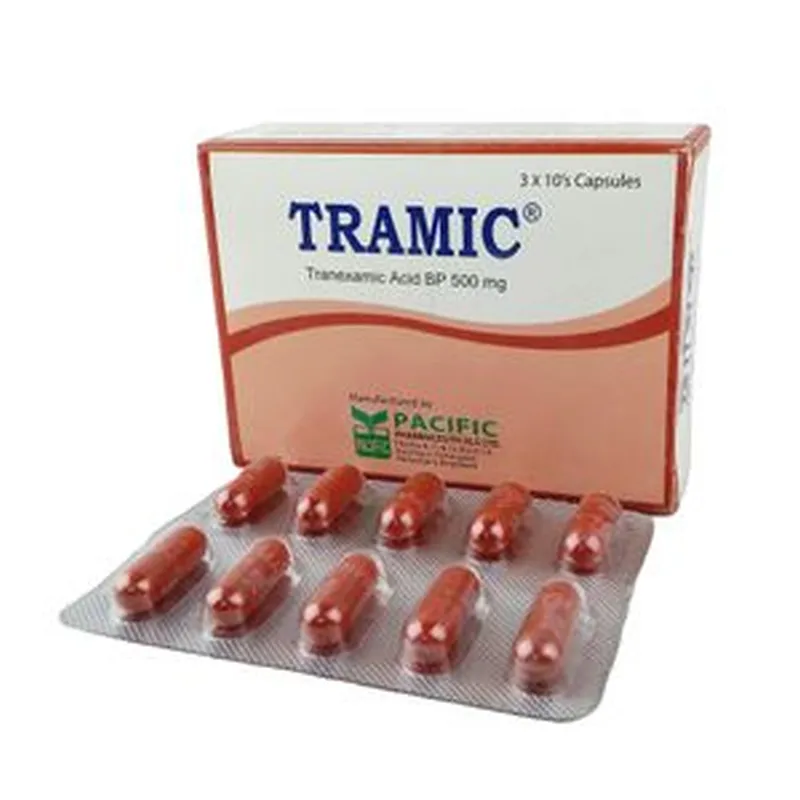
Tramic - Capsule
Tranexamic Acid - 500mg
10 Capsule(s) / Strip
Pacific Pharmaceuticals Ltd.
Introduction: Tramic is used to treat bleeding. It helps to prevent or reduce bleeding in conditions like tooth removal, heavy periods, dysfunctional uterine bleeding, nosebleed and in any oral, prostate or bladder surgery. Tramic is an anti-fibrinolytic. It works by preventing the breakdown of clots which leads to stoppage of bleeding. This medicine must be taken in the dose and duration as advised by the doctor. You should not take it if you have any known allergy from this medicine. The most common side effects may be injection site reactions such as tiredness, nasal congestion or pain in muscle, bone or...
Uses of Tramic: Bleeding
Side effects of Tramic: TirednessNasal congestion (stuffy nose)Musculoskeletal (bone, muscle or joint) pain
How to use Tramic: Take this medicine in the dose and duration as advised by your doctor. Swallow it as a whole. Do not chew, crush or break it. Tramic is to be taken with food.
How Tramic works: Tramic is an anti-fibrinolytic. It works by preventing the breakdown of blood clots to control excessive bleeding during periods, or after surgery.
What if you forget to take Tramic?: If you miss a dose of Tramic, skip it and continue with your normal schedule. Do not double the dose.
Indication: Haemorrhage, Hereditary angioedema
Administration: May be taken with or without food.
Adult Dose: Oral Short-term management of haemorrhage Adult: 1-1.5 g or 15-25 mg/kg bid or tid. Management of hereditary angioedema Adult: 1-1.5 g bid or tid. Intravenous Short-term management of haemorrhage Adult: 0.5-1 g or 10 mg/kg tid or 25-50 mg/kg daily by continuous infusion.
Child Dose: Oral Short-term management of haemorrhage Child: 25 mg/kg bid or tid. Management of hereditary angioedema Child: 25 mg/kg bid or tid. Intravenous Short-term management of haemorrhage Child: 10 mg/kg bid or tid.
Renal Dose: Renal impairment: Adjust dose based on serum creatinine concentration: 120-250 micromol/l: 15 mg/kg bid daily; 250-500 micromol/l: 15 mg/kg once daily; >500 micromol/l: 7.5 mg/kg once daily or 15 mg/kg once every 48 hr.
Contraindication: Severe renal failure, active intravascular clotting, thromboembolic disease, colour vision disorders, subarachnoid bleeding.
Mode of Action: Tranexamic acid is an antifibrinolytic agent that competitively inhibits breakdown of fibrin clots. It blocks binding of plasminogen and plasmin to fibrin, thereby preventing haemostatic plug dissolution.
Precaution: Mild to moderate renal impairment, irregular menstrual bleeding, previous history of thromboembolic disease, haematuria. Monitor closely in disseminated intravascular coagulation. Monitor LFT and eye examination regularly during long-term use. Discontinue if disturbance in colour vision occurs. Avoid IV inj rate >1 ml/minute due to risk of hypotension. Pregnancy, lactation.
Side Effect: >10% Headache (50.4%),Nasal and sinus symptoms (25.4%),Back pain (20.7%),Abdominal pain (19.8%),Musculoskeletal pain (11.2%) 1-10% Arthralgia (6.9%),Muscle cramps and spasms (5.8%),Migraine (6%),Anemia (5.6%),Fatigue (5.2%) Frequency Not Defined Visual abnormalities,Hypotension (with rapid injection),Nausea,Vomiting,Diarrhea
Interaction: Potentially Fatal: Increased risk of thrombus formation with estrogens, Factor IX complex concentrates or anti-inhibitor coagulant concentrates. Increased risk of fatal thrombotic complications with tretinoin in acute promyelocytic leukaemia.
|

No review yet!




LIVE SHOP
(0)
14680 Products
0%
Positive review