English
 Bangla
 Arabic






















Details description |
|---|
|
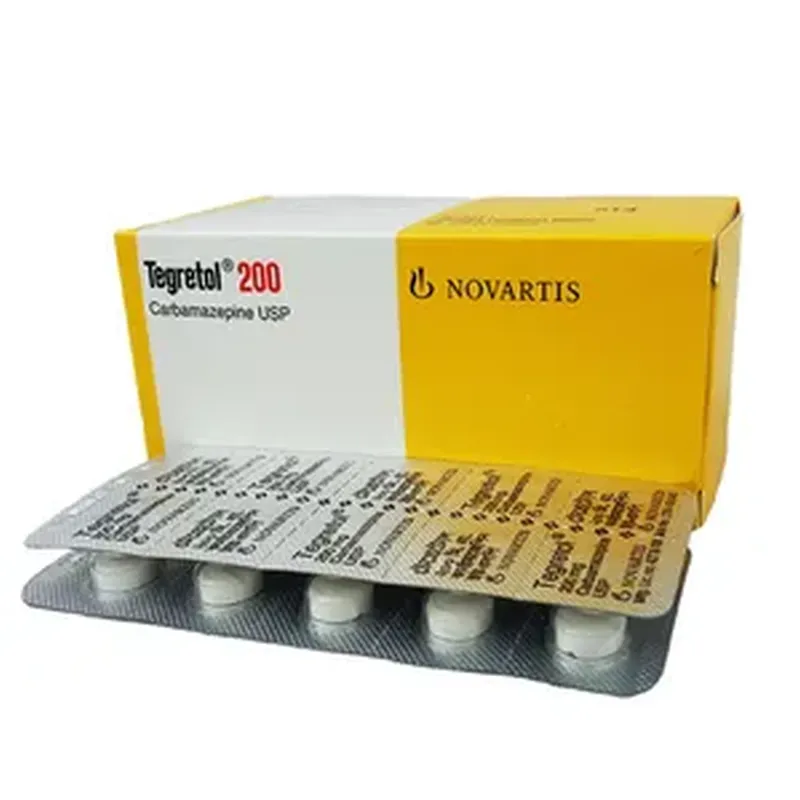
Tegretol 200 - Tablet
Carbamazepine - 200mg
10 Tablet(s) / Strip
Nevian Lifescience PLC
Introduction: Tegretol 200 is an anti-epileptic medicine used to treat epilepsy. It helps prevent certain types of seizures (fits). It is also prescribed for a painful condition of the face, head, and neck known as trigeminal neuralgia and diabetes-related nerve pain (diabetic neuropathy). Tegretol 200 is also occasionally used to treat certain serious mood disorders (eg. bipolar disorder) when other medicines have not worked. The dose and how often you need to take it will be decided by your doctor so that you get the right amount to control your symptoms. It may be increased gradually. Many other medicines can interfere...
Uses of Tegretol 200: Epilepsy/SeizuresTrigeminal neuralgia
Side effects of Tegretol 200: Balance disorder (loss of balance)DizzinessDrowsinessNauseaSlurred speechVomitingBlurred visionConstipationDryness in mouthFatigueItching
How to use Tegretol 200: Take this medicine in the dose and duration as advised by your doctor. Swallow it as a whole. Do not chew, crush or break it. Tegretol 200 may be taken with or without food, but it is better to take it at a fixed time.
How Tegretol 200 works: Tegretol 200 is an antiepileptic medication. It controls seizures or fits by decreasing the abnormal and excessive activity of the nerve cells in the brain.
What if you forget to take Tegretol 200?: If you miss a dose of Tegretol 200, take it as soon as possible. However, if it is almost time for your next dose, skip the missed dose and go back to your regular schedule. Do not double the dose.
Indication: Epilepsy, Schizophrenia, Bipolar disorder, Trigeminal neuralgia
Administration: Should be taken with food. Avoid grapefruit juice.
Adult Dose: Oral Epilepsy Adults - Initial: Either 200 mg b.i.d. for tablets and XR tablets, or 1 teaspoon q.i.d. for suspension (400 mg/day). Increase at weekly intervals by adding up to 200 mg/day using a b.i.d or a t.i.d. or q.i.d. regimen of the either formulations until the optimal response is obtained. Doses up to 1600 mg daily have been used in adults in rare instances. Maintenance: usually 800-1200 mg daily. Trigeminal neuralgia Adult: Initially, 100-200 mg bid, increased gradually as needed. Maintenance: 400-800 mg daily in divided doses. Max: 1.2 g daily. Prophylaxis of bipolar disorder Adult: Initially, 400 mg...
Child Dose: Epilepsy 12 Years Initial (oral suspension): 10 mL (200 mg) PO q6hr Initial (tablet, immediate- or extended-release): 200 mg PO q12hr May increase by up to 200 mg/day qWeek; q12hr (extended-release tablet); q6-8hr (other formulations) 12-15 years: Dose not to exceed 1000 mg/day >15 years: Dose not to exceed 1200 mg/day
Contraindication: Hypersensitivity; bone marrow depression; porphyria, pregnancy.
Mode of Action: Carbamazepine reduces polysynaptic responses and blocks post-tetanic potentiation. It is effective in partial and generalised convulsions as well as in mixed types but not in petit mal seizures. It reduces or abolishes pain in trigeminal and glossopharyngeal neuralgia.
Precaution: Lactation; CV disease, hepatic or renal disorders, history of blood disorders or haematological reactions to other drugs; glaucoma; skin disorders; elderly, patients on MAO inhibitors; abrupt withdrawal of treatment. Lactation: Enters breast milk; not recommended (AAP states compatible with nursing; however, adverse reactions in breastfeeding infant are possible; take into account the importance of the drug to the mother before deciding to discontinue breastfeeding or the drug)
Side Effect: >10% Ataxia (15%),Dizziness (44%),Drowsiness (32%),Nausea (29%),Vomiting (18%) 1-10% Dry mouth (8%) Rare MI,Stevens-Johnson syndrome Hepatic failure,Punctate cortical lens opacities,Syndrome of inappropriate antidiuretic hormone secretion (SIADH) Frequency Not Defined Hemopoietic system: Aplastic anemia, agranulocytosis, pancytopenia, bone marrow depression, thrombocytopenia, leukopenia, leukocytosis, eosinophilia, anemia, acute intermittent porphyria, variegate porphyria, porphyria cutanea tarda Skin: Toxic epidermal necrolysis (TEN) and Stevens-Johnson syndrome (SJS) (see Black Box Warnings), pruritic and erythematous rashes, urticaria, photosensitivity reactions, alterations in skin pigmentation, exfoliative dermatitis, erythema multiforme and nodosum, purpura, aggravation of disseminated lupus erythematosus, alopecia, diaphoresis, and onychomadesis Cardiovascular system: Congestive heart failure, edema, aggravation of hypertension, hypotension,...
Pregnancy Category Note: Pregnancy category: D Lactation: Enters breast milk; not recommended (AAP states compatible with nursing; however, adverse reactions in breastfeeding infant are possible; take into account the importance of the drug to the mother before deciding to discontinue breastfeeding or the drug)
Interaction: Increased plasma levels w/ CYP3A4 inhibitors (e.g. cimetidine). Decreased plasma levels w/ CYP3A4 inducers (e.g. cisplatin). Increased risk of neurotoxic side effects w/ lithium. May decrease the effect of hormonal contraceptives. Increased plasma levels of active metabolite carbamazepine-10, 11-epoxide w/ loxapine, quetiapine, primidone, progabide, valproic acid and valpromide. May increase cyclophosphamide levels. May reduce exposure of aripiprazole. May reduce plasma levels of tacrolimus, temsirolimus and lapatinib. May increase risk of isoniazid-induced hepatotoxicity. Risk of symptomatic hyponatraemia w/ diuretics (e.g. hydrochlorothiazide, furosemide). Potentially Fatal: May decrease serum concentrations of nefazodone and its active metabolites. Toxic reactions may develop when taken concurrently...
|

No review yet!



LIVE SHOP
(0)
14680 Products
0%
Positive review