English
 Bangla
 Arabic




















Details description |
|---|
|
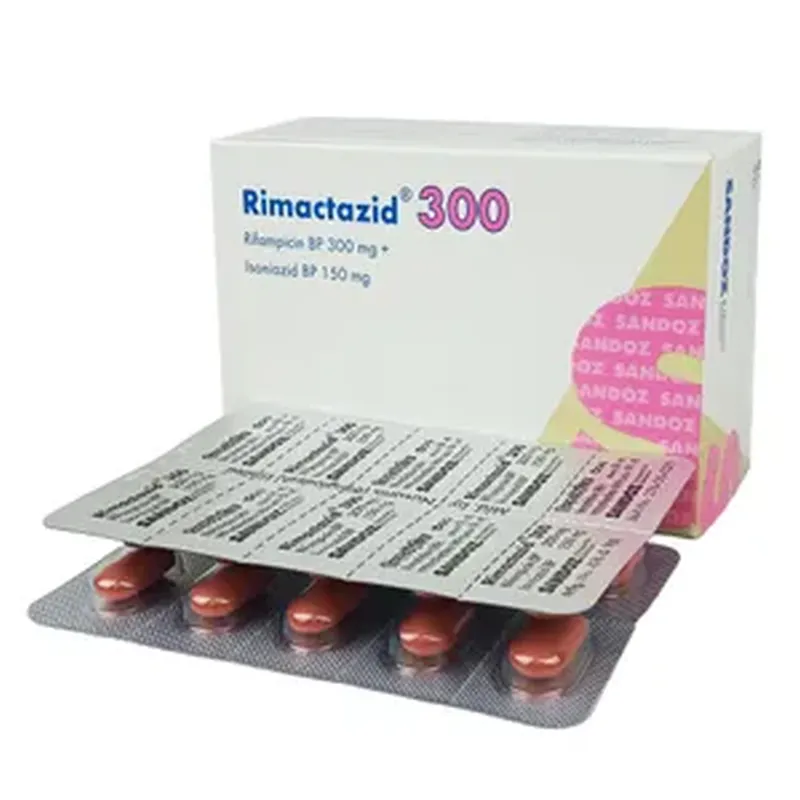
Rimactazid 300 - Tablet
Isoniazid + Rifampicin - 150mg+300mg
10 Tablet(s) / Strip
Nevian Lifescience PLC
Introduction: Rimactazid 300 is a combination medicine used in the treatment of tuberculosis. It prevents the growth of the microorganisms that cause the infection. Rimactazid 300 is a prescription medicine and it is to be taken as suggested by the doctor. It should be taken in an empty stomach and take it at a fixed time to ensure better efficacy. Do not consume more than the recommended dose, as this may have harmful effects on your body. If you miss a dose, take it as soon as you remember. The course of the treatment must be completed even if you feel...
Uses of Rimactazid 300: Tuberculosis (TB)
Side effects of Rimactazid 300: Dark colored urineRashVomitingJaundiceFeverIncreased liver enzymesNauseaPeripheral neuropathy (tingling and numbness of feet and hand)
How to use Rimactazid 300: Take this medicine in the dose and duration as advised by your doctor. Swallow it as a whole. Do not chew, crush or break it. Rimactazid 300 is to be taken empty stomach. Avoid Rimactazid 300 with tyramine-rich food such as cheese, smoked fish, meats and some types of beer.
How Rimactazid 300 works: Rimactazid 300 is a combination of two antibiotics: Rifampicin and Isoniazid, which treats tuberculosis (TB). Rifampicin works by inactivating a bacterial enzyme (RNA-polymerase) which is required by TB bacteria to make essential proteins and to reproduce. Isoniazid prevents these bacteria from forming their own protective covering. Together, they kill the bacteria and eradicate the infection.
Indication: Tuberculosis
Adult Dose: Oral Tuberculosis Adult: Each tab contains rifampicin and isoniazid (mg): 50 kg: 2 tab of 300/150 once daily. Hepatic impairment: Max: 8 mg/kg daily.
Contraindication: Known or suspected hypersensitivity to rifamycins and/or to INH, and/or to any of the excipients including a history of drug-induced hepatitis; acute liver diseases, regardless of their origin; peripheral neuritis.
Mode of Action: Rifampicin and isoniazid are active bactericidal anti-TB drugs which are particularly active against the rapidly growing extracellular organisms and also have bactericidal activity intracellularly. Rifampicin inhibits DNA-dependent RNA polymerase activity in susceptible cells. Specifically, it interacts w/ bacterial RNA polymerase but does not inhibit the mammalian enzyme. Cross-resistance to rifampicin has only been shown w/ other rifamycins. It has activity against slow- and intermittently-growing M. tuberculosis. Isoniazid acts against actively growing tubercle bacilli.
Precaution: Use of isoniazid should be carefully monitored in the following: Daily users of alcohol. Daily ingestion of alcohol may be associated with a higher incidence of isoniazid hepatitis. Patients with active chronic liver disease or severe renal dysfunction. Age > 35. Concurrent use of any chronically administered medication. History of previous discontinuation of isoniazid. Existence of peripheral neuropathy or conditions predisposing to neuropathy. Pregnancy. Injection drug use. Women belonging to minority groups, particularly in the post-partum period. HIV seropositive patients.
Side Effect: Unwanted effects which may occur during continuous daily or intermittent therapy: Rifampicin: Rifampicin may cause reddish discolouration of body fluids and occasionally other body secretions eg, urine, sputum, lacrimal fluid, faeces, saliva and sweat. It may permanently discolour soft contact lenses. Hepatic Effects: Very common (>10%) is an asymptomatic increase in liver enzymes; severe life-threatening hepatic reactions eg, hepatic failure and acute fulminant hepatitis are uncommon (>0.1% and <1%). In isolated cases (<0.01%), a fatal outcome was observed. Renal Effects: Elevations of BUN and serum uric acid, haemolysis, haematuria, interstitial nephritis, renal insufficiency. Gastrointestinal Effects: Nausea, abdominal pains, vomiting or...
Interaction: May reduce effectivity of hormonal contraceptives. Reduced absorption w/ antacids. May decrease plasma concentrations of antivirals (e.g. atazanavir, darunavir, fosamprenavir), atovaquone w/ rifampicin. Rifampicin may reduce serum levels of anticonvulsants (e.g. phenytoin), antiarrhythmics (e.g. disopyramide), oral anticoagulants, antifungals (e.g. ketoconazole), barbiturates, ?-blockers, Ca channel blockers (e.g. diltiazem), chloramphenicol, clarithromycin, corticosteroids, ciclosporin, cardiac glycosides, clofibrate, dapsone, diazepam, doxycycline, fluoroquinolones (e.g. ciprofloxacin), haloperidol, oral hypoglycemic agents (sulfonylureas), levothyroxine, methadone, narcotic analgesics, progestins, quinine, tacrolimus, theophylline, TCAs (e.g. amitriptyline, nortriptyline) and zidovudine. Increased risk of hepatotoxicity w/ halothane. Isoniazid may inhibit the metabolism of anticonvulsants (e.g. carbamazepine, phenytoin), benzodiazepines (e.g. diazepam), haloperidol, ketoconazole,...
|

No review yet!



LIVE SHOP
(0)
14680 Products
0%
Positive review