English
 Bangla
 Arabic






















Details description |
|---|
|
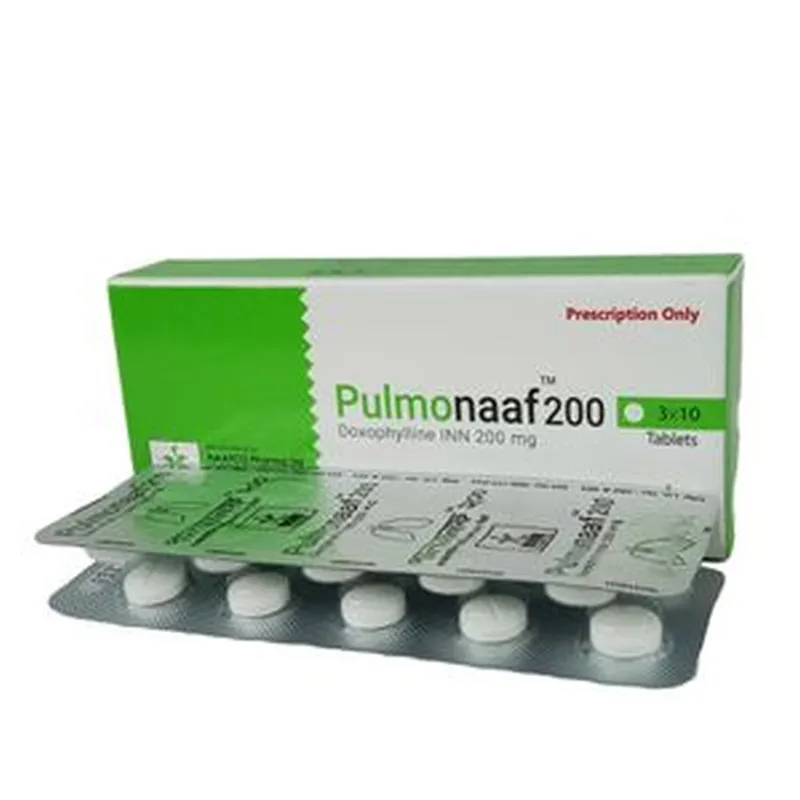
Pulmonaaf 200 - tablet
Doxophylline - 200mg
10 Tablet(s) / Strip
Naafco Pharma Ltd.
Introduction: Pulmonaaf 200 is used to treat and prevent symptoms of asthma and chronic obstructive pulmonary disorder (a lung disorder in which flow of air to the lung is blocked). It helps in relaxing the muscles of the air passages, thus widening it and making it easier to breathe. Pulmonaaf 200 can be taken with the food in evening. But take it at the same time every day to get the most benefit. The dose and how often you take it depends on what you are taking it for. Your doctor will decide how much you need to improve your symptoms....
Uses of Pulmonaaf 200: Chronic obstructive pulmonary disease (COPD)Asthma
Side effects of Pulmonaaf 200: Upset stomachVomitingHeadacheNauseaRestlessness
How to use Pulmonaaf 200: Take this medicine in the dose and duration as advised by your doctor. Swallow it as a whole. Do not chew, crush or break it. Pulmonaaf 200 may be taken with or without food, but it is better to take it at a fixed time. Avoid Pulmonaaf 200 with caffeine and chocolate as well as food containing caffeine and chocolate such as tea leaves, cocoa beans.
How Pulmonaaf 200 works: Pulmonaaf 200 is a bronchodilator. It works by relaxing the muscles of the airways and widens airways. This makes breathing easier.
Indication: COPD (Chronic Obstructive Pulmonary Disease), bronchial asthma
Adult Dose: Tablet Adults: Conventional Tablet 400mg 1 to 3 times a day. Sustained release tablet: 400 mg sustained release tablet once a day. Single dose, administration in the evening reduces nocturnal, symptoms and helps to keep the patients complaint free during the day. However, in certain cases, 400 mg tablet twice daily is recommended on the basis of the clinical response and according to disease severity. Doses as high as 1200mg/day (400 mg 3 times day) may also be prescribed. Elderly: The dosage may be decreased according to medical prescription in the very elderly patients with concomitant cardiovascular, hepatic, renal and...
Child Dose: Tablet Children >12 years: 200 mg 2 or 3 times daily. Syrup Children> 12 years: 10 ml, 2 or 3 times daily. Children<12 years: 6 mg/kg/dose twice daily. In case of unsatisfactory response it can be increased up to 9 mg/kg/dose twice daily under medical supervision.
Contraindication: This is contraindicated for individuals who have shown hypersensitivity to Doxofylline and its components. It is also contraindicated in patients with acute myocardial infarction, hypotension, and in lactating women.
Mode of Action: Doxofylline is a theophylline derivative. Similarly, its mechanism of action is related to the inhibition of phosphodiesterase activities, resulting in bronchodilating effects.
Precaution: Use with caution in patients with hypoxemia, hyperthyroidism, liver disease, renal disease, in those with history of peptic ulcer and in elderly. Frequently, patients with Congestive Heart Failure (CHF) have markedly prolonged drug serum levels following discontinuation of Doxofylline.
Side Effect: Nausea, vomiting, epigastric pain, cephalalgia, irritability, insomnia, tachycardia, extrasystole, tachypnea and occasionally, hyperglycemia and albuminuria, may occur. If a potential oral overdose is established, the patient may present with severe arrhythmias and seizure; these symptoms could be the first sign of an intoxication. Adverse reactions may cause the withdrawal from treatment; a lower dose rechallenge may start only after the advice of a physician.
Interaction: Other xanthine derivatives, ephedrine, phenytoin & other anticonvulsants, erythromycin, troleandomycin, lincomycin, clindamycin, allopurinol, cimetidine, ranitidine, propranolol, flu vaccine.
|

No review yet!



LIVE SHOP
(0)
14680 Products
0%
Positive review