 English
 Bangla
 Arabic






















Details description |
|---|
|
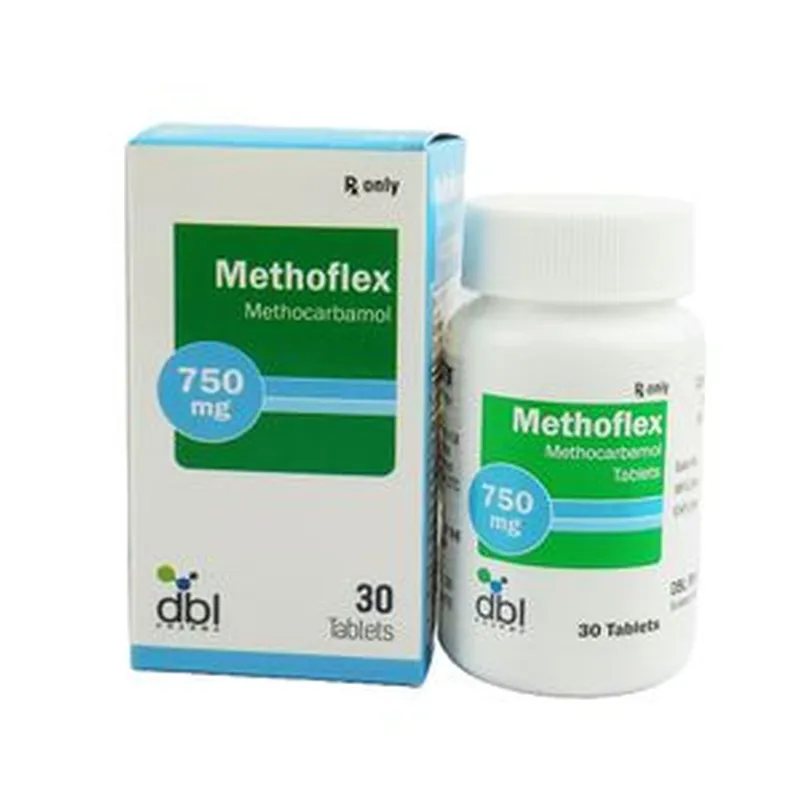
Methoflex 750 - tablet
Methocarbamol - 750mg
30 Tablet(s) / Box
DBL Pharmaceuticals Ltd.
Introduction: Methoflex 750 is a muscle relaxer. It provides relief from the discomfort associated with acute, painful musculoskeletal conditions such as rigidity, tension, stiffness, and muscle spasms. Methoflex 750 is generally administered by a healthcare professional. You should not self-administer this medicine at home. The dose and duration will depend on what you are taking it for and how well it helps your symptoms. It may be only part of a treatment program that includes other medicines and therapies. The most common side effects of this medicine include injection site reactions (such as pain, redness, and swelling), headache, drowsiness, fatigue, vomiting,...
Uses of Methoflex 750: Muscle relaxation
Side effects of Methoflex 750: SleepinessDryness in mouth
How to use Methoflex 750: Your doctor or nurse will give you this medicine. Kindly do not self administer.
How Methoflex 750 works: Methoflex 750 is a muscle relaxant. It works on the centres in the brain and spinal cord to relieve muscle stiffness or spasm without reduction in strength. This improves pain and movement of muscles.
What if you forget to take Methoflex 750?: If you miss a dose of Methoflex 750, take it as soon as possible. However, if it is almost time for your next dose, skip the missed dose and go back to your regular schedule. Do not double the dose.
Indication: Muscle Spasm, Tetanus
Administration: IV Administration Direct IV: Administer undiluted at not to exceed 3 mL (=300 mg undiluted)/min Infusion: Dilute 1 g with up to 250 mL D5W or NS; avoid extravasation, since injection is hypertonic Administer IV while in recumbent position Maintain position 15-30 min following infusion IM Administration Not to exceed 500 mg (5 mL undiluted) should be given into each gluteal region
Adult Dose: Oral Muscle spasm Adult: Initially: 1.5 g q6hr for 48-72 hours; not to exceed 8 g/day THEN decrease to 4-4.5 g/day divided q4-8hr Parenteral 1 g IV/IM; additional doses at q8hr until PO; not to exceed 3 g/day Total parenteral dose should not exceed 3 g/day for >3 days, unless treating tetanus; if condition persists, may repeat therapy after drug-free interval of 48 hr Intravenous Tetanus Adult: Adjunct therapy: Initial 1-2 g IV injection (at 300 mg/min), THEN Additional 1-2 g IV infusion for total dose of 3 g initially May repeat 1-2 g IV q6hr until can give NG...
Child Dose: Tetanus 15 mg/kg/dose IV q6hr PRN or 500 mg/m²/dose; not to exceed 1.8 g/m²/day for 3 days only Muscle Spasm 16 years: 1500 mg PO q6hr for 48-72 hours; not to exceed 8 g/day THEN decrease to 4-4.5 g/day divided q4-8hr
Renal Dose: Renal failure: Not studied; parenteral dosage form contraindicated due to presence of polyethylene glycol
Contraindication: Hypersensitivity, Do not admin parenteral solutions in patients with renal impairment, epilepsy or history of epilepsy. Coma or pre-coma states, brain damage, myasthenia gravis
Mode of Action: Unknown; Methocarbamol is a centrally acting skeletal muscle relaxant whose precise mode of action is not known. It is said to cause general depression of the central nervous system.
Precaution: May cause drowsiness/dizziness; patients should not ingest alcohol or other CNS depressants May take with food to avoid stomach upset Half-life increases with hepatic impairment IV formulation not for use in renal impairment (contains polyethylene glycol; injection rate should not exceed 3 mL/min May interfere with screening tests for 5-HIAA and vanillylmandelic acid (VMA) Use injection with caution in patients with a history of seizures Sedative effects potentiated when used with other sedatives Medication is poorly tolerated in the elderly Pediatric IV dosing approved only for tetanus Lactation: Not known if excreted in breast milk; use caution
Side Effect: Nausea, anorexia, fever, headache, blurred vision, lassitude, drowsiness, dizziness, restlesness, anxiety, confusion, convulsions; hypersensitivity reactions e.g. rashes, pruritus, urticaria, angiodema. Parenteral: Flushing and a metallic taste; incoordination, diplopia, nystagmus, vertigo; sloughing and thrombophloebitis at the site of inj. Potentially Fatal: Parenteral: Syncope, hypotension, bradycardia, anaphylaxis.
Interaction: Action potentiated by alcohol and other CNS depressants. May inhibit effect of pyridostigmine, use with caution with anticholinesterase agents.
|

No review yet!




LIVE SHOP
(0)
14680 Products
0%
Positive review