 English
 Bangla
 Arabic





















Details description |
|---|
|
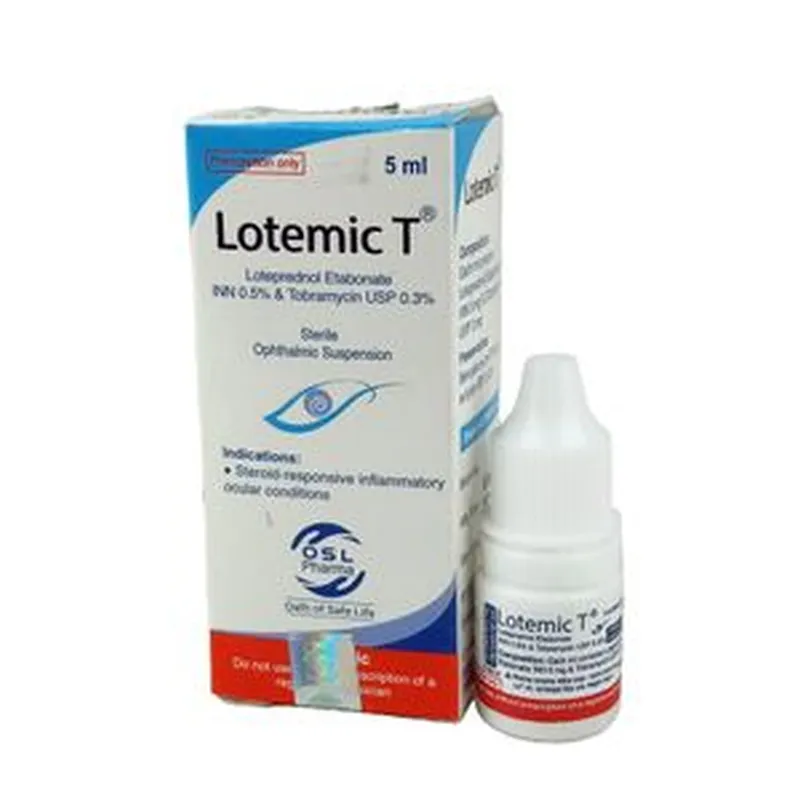
Lotemic T Eye Drops - Eye Drop
Loteprednol Etabonate 0.5% + Tobramycin 0.3% Eye prep - 0.5%+0.3%
1 5ml drop(s) / 5ml drop
OSL Pharma Limited
Introduction: Lotemic T Eye Drops is a prescription medicine having a combination of medicines that is used to treat eye infections with inflammation. It stops the growth of bacteria and helps in relieving redness, itching and swelling. Lotemic T Eye Drops is to be used only in the affected eye in the dose and duration as advised by the doctor. Wash your hands before using this medicine. It is advised to check the label for directions before use. Do not skip any doses and finish the full course of treatment even if you feel better. Stopping the medicine too early may...
Uses of Lotemic T Eye Drops: Eye infection with inflammation
Side effects of Lotemic T Eye Drops: Eye irritationEye discomfort
How to use Lotemic T Eye Drops: This medicine is for external use only. Take it in the dose and duration as advised by your doctor. Check the label for directions before use. Hold the dropper close to the eye without touching it. Gently squeeze the dropper and place the medicine inside the lower eyelid. Wipe off extra liquid.
How Lotemic T Eye Drops works: Lotemic T Eye Drops is a combination of two medicines: Loteprednol etabonate and Tobramycin. Loteprednol etabonate is a steroid which blocks the production of certain chemical messengers (prostaglandins) that make the eye red, swollen and itchy. Tobramycin is an antibiotic. It stops bacterial growth in the eye by preventing the synthesis of essential proteins required by bacteria to carry out vital functions.
Indication: Keratitis, Allergic conjunctivitis, Iritis, Ocular inflammation, Bacterial ocular infection, Cyclitis
Adult Dose: Ocular Inflammation Indicated for steroid-responsive ocular inflammations with risk of superficial bacterial infections Adult: Instill 1 or 2 drops of into the conjunctival sac of the affected eye(s) every 4 to 6 hours.; may use as frequently as q1-2hr during first 24-48 hr Decrease frequency of administration as signs and symptoms improve
Child Dose: Safety & efficacy not been established.
Contraindication: Hypersensitivity to any component of the formulation or to other corticosteroids Viral, mycobacterial & fungal eye infections
Mode of Action: Loteprednol is a synthetic nonfluorinated glucocorticoid. It stimulates the production of lipicortins, proteins that modulate the activity of prostaglandins and leukotrienes. Tobramycin acts by binding to 30S ribosomal subunits thus interfering with bacterial protein synthesis. It is active against many aerobic gram-negative bacteria and some aerobic gram-positive bacteria but inactive against Chlamydia, fungi, viruses, and most anaerobic bacteria.
Precaution: History of herpes simplex infections May exacerbate infections by nonsusceptible organisms Monitor IOP if used >10 d Bacterial keratitis reported from inadvertent contamination of multiple dose ophthalmic solution Immunosuppression resulting from prolonged use of steroid use may result in secondary bacterial and fungal infections; steroids may also mask symptoms of infections and enhance existing ocular infections Ocular hypertension and/or glaucoma reported with prolonged corticosteroid use Discontinue use if sensitivity reaction to tobramycin develops Corticosteroid use following cataract surgery may delay healing Lactation: Excretion in milk unknown; use caution
Side Effect: Prolonged use may increase: IOP, which may be associated with possible development of glaucoma and infrequent optic nerve damage; posterior sub-capsular cataract formation and perforation of the globe where there is thinning of the cornea or sclera. The most frequent adverse reactions to topical tobramycin are hypersensitivity and localized ocular toxicity, including lid itching and swelling and conjunctival erythema.
Interaction: Enhanced neurotoxic and nephrotoxic effects w/ other aminoglycosides (e.g. amikacin, streptomycin), cefaloridine, viomycin, polymyxin B, colistin, cisplatin and vancomycin. Enhanced toxicity w/ potent diuretics (e.g. ethacrynic acid, furosemide). Prolonged secondary apnoea may occur when given to anaesthetised patients receiving neuromuscular blocking agents (e.g. succinylcholine, tubocurarine, decamethonium). Increased risk of nephrotoxicity w/ ciclosporin and other antibacterials (e.g. cephalosporins). Antagonistic effect w/ neostigmine and pyridostigmine. May potentiate the effect of warfarin and phenindione.
|

No review yet!



LIVE SHOP
(0)
14680 Products
0%
Positive review