English
 Bangla
 Arabic





















Details description |
|---|
|
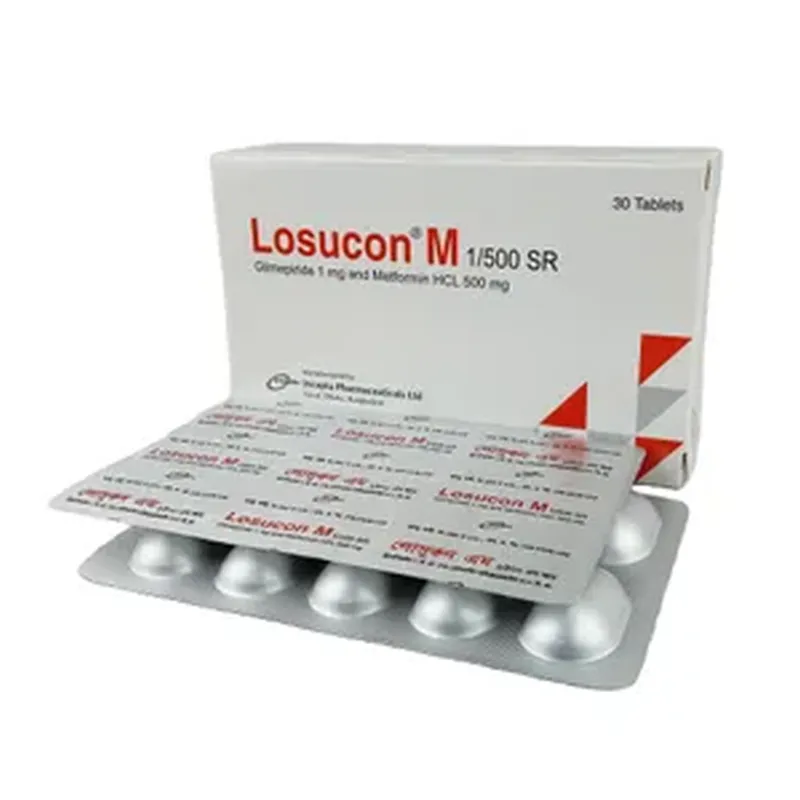
Losucon M 1 SR - Tablet
Glimepiride + Metformin - 1mg+500mg
10 Tablet(s) / Strip
Incepta Pharmaceuticals Ltd.
Introduction: Losucon M 1 SR belongs to a category of medicines known as anti-diabetic drugs. It is a combination of two medicines used to treat type 2 diabetes mellitus in adults. It helps control blood sugar levels in people with diabetes. Losucon M 1 SR should be taken with food. Take it regularly at the same time each day to get the most benefit. Your doctor will decide what dose is best for you and this may change from time to time according to how it is working according to your blood sugar levels. Keep taking this medicine, even if you...
Uses of Losucon M 1 SR: Type 2 diabetes mellitus
Side effects of Losucon M 1 SR: Hypoglycemia (low blood glucose level)Taste changeNauseaDiarrheaStomach painHeadacheUpper respiratory tract infection
How to use Losucon M 1 SR: Use it as advised by your doctor or check the label for directions before use. Losucon M 1 SR is to be taken with food.
How Losucon M 1 SR works: Losucon M 1 SR is a combination of two antidiabetic medicines: Glimepiride and Metformin. Glimepiride is a sulfonylurea which works by increasing the amount of insulin released by the pancreas in order to lower the blood glucose. Metformin is a biguanide which works by lowering glucose production in the liver, delaying glucose absorption from intestines and increasing the body's sensitivity to insulin.
Indication: Type 2 diabetes mellitus
Administration: Should be taken with breakfast or first main meal of the day.
Adult Dose: Oral Type 2 diabetes mellitus Adult: Each tablet contains glimepiride 1 mg or 2 mg and metformin sustained release 500 mg The initial recommended dose is one tablet once daily Maximum Recommended Dose The maximum recommended dose for glimepiride is 8 mg daily. The maximum recommended daily dose for metformin sustained-release is 2000 mg in adults. Dosage should be individualized on the basis of both effectiveness and tolerance.
Contraindication: Renal disease or renal dysfunction, as suggested by serum creatinine levels ≥1.5 mg/dL [males], ≥1.4 mg/dL [females] or abnormal creatinine clearance, which may also result from conditions such as cardiovascular collapse (shock), acute myocardial infarction, and septicaemia. Hepatic impairment. Known hypersensitivity to this product or any of its components. Acute or chronic metabolic acidosis, including diabetic ketoacidosis, with or without coma. Diabetic ketoacidosis should be treated with insulin. Patients undergoing radiologic studies involving intravascular administration of iodinated contrast materials, because the use of such products may result in acute alteration of renal function Pregnancy, lactation.
Mode of Action: Glimepiride stimulates the insulin release from functioning pancreatic β-cells and inhibits gluconeogenesis at hepatic cells. It also increases insulin sensitivity at peripheral target sites. Metformin decreases hepatic gluconeogenesis, decreases intestinal absorption of glucose and improves insulin sensitivity (increases peripheral glucose uptake and utilisation).
Precaution: Renal and hepatic impairment. Avoid alcohol consumption. Hypoglycaemic episodes.
Side Effect: Diarrhoea, vomiting, metallic taste, rash, isolated transaminase elevations, cholestatic jaundice, allergic skin reactions, photosensitivity reactions, leukopaenia, agranulocytosis, thrombocytopaenia, haemolytic anaemia, aplastic anaemia, pancytopaenia, blurred vision. Potentially Fatal: Lactic acidosis.
Interaction: Cationic drugs: Certain medications used concomitantly with metformin may increase the risk of lactic acidosis. Cationic drugs that are eliminated by renal tubular secretions (e.g: amiloride, digoxin, morphine, procainamide, quinidine, ranitidine, or vancomycin) may decrease metformin elimination by competing for common renal tubular transport systems. Hence, careful patient monitoring and dose adjustment of metformin/cationic drug is recommended. Miconazole (systemic route, oromucosal gel) and Phenylbutazone (systemic route): Increases hypoglycemic effect of glimepiride. Thiazide: Interactions between thiazide diuretics and oral antidiabetic agents decreases insulin sensitivity thereby leading to glucose intolerance and hyperglycemia. Hence diabetic patients should be monitored closely. Other: Concomitant administration...
|

No review yet!




LIVE SHOP
(0)
14680 Products
0%
Positive review