English
 Bangla
 Arabic





















Details description |
|---|
|
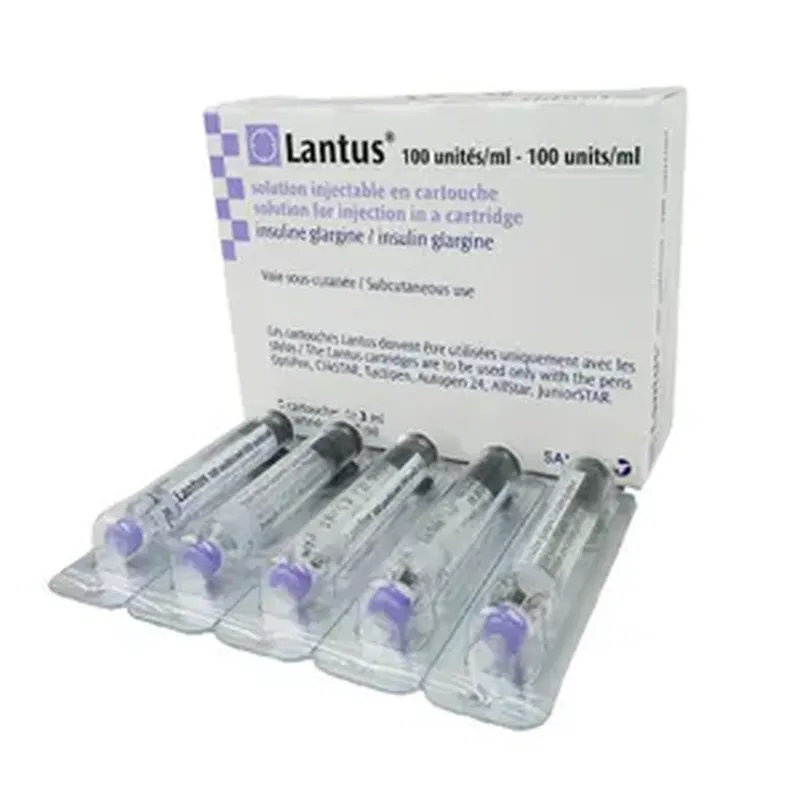
Lantus Cartidge - SC Injection
Insulin Glargine - 100IU/ml
1 3ml Cartidge(s) / 3ml Cartidge
Synovia Pharma PLC.
Introduction: Lantus Cartidge is a long-acting type of insulin used to treat types 1 and 2 diabetes mellitus in both adults and children. It provides a steady level of insulin in the body for an entire day and helps control blood sugar levels. This helps to prevent complications of diabetes. Lantus Cartidge can be prescribed alone or along with fast-acting insulin or other diabetes medicines. Your doctor or nurse will teach you the correct way of injecting it under the skin. You should use this medicine regularly as per the dose advised to get the maximum benefit. If you stop taking...
Uses of Lantus Cartidge: Diabetes mellitus (Type 1 & Type 2)
Side effects of Lantus Cartidge: Hypoglycemia (low blood glucose level)Injection site allergic reactionLipodystrophy (skin thickening or pits at the injection site)
How to use Lantus Cartidge: Your doctor or nurse will guide you how to use this medicine.
How Lantus Cartidge works: Lantus Cartidge is a long-acting insulin that provides consistent, all-day sugar control. It works like your body's natural insulin. Insulin facilitates reuptake of sugar in muscle and fat cells and also suppresses the production of sugar in the liver.
Indication: Diabetes mellitus
Administration: Administer subcutaneously in the upper arm, thigh or abdominal wall. A subcutaneous injection into the abdominal wall results in a faster absorption than from other injection sites. Should not be administered IV or via an insulin pump; IV administration of the usual SC dose could result in severe hypoglycemia
Adult Dose: Subcutaneous Type 1 or 2 Diabetes Mellitus Initial dose Type 1 diabetes mellitus: Starting dose should be approximately one third of the total daily insulin requirements; short-acting, premeal insulin should be used to satisfy the remaining two thirds of the daily insulin requirements; insulin glargine should be used in combination with a short-acting or rapid-acting insulin; Type 2 diabetes mellitus: Starting dose in patients who are not currently treated with insulin is 10 units (or 0.2 unit/kg) once daily Dosage should be individualized in accordance with the needs of the patient and adjusted according to blood glucose measurement Converting from...
Child Dose: Type 1 Diabetes Mellitus It is a long-acting human insulin analogue indicated to improve glycemic control in children with type 1 diabetes mellitus; 6 years: Approximately one third of the total daily insulin requirements SC; rapid-acting or short-acting, premeal insulin should be used to satisfy the remaining two thirds of the daily insulin requirements; usual daily maintenance range in adolescents is <1.2 units/kg/day during growth spurts
Renal Dose: Renal impairment: Dose adjustments may be needed.
Contraindication: Hypoglycaemia; IV route.
Mode of Action: Insulin glargine, a long-acting analog of human insulin, regulates carbohydrate, protein and fat metabolism by inhibiting hepatic glucose production and lipolysis, and enhancing peripheral glucose disposal.
Precaution: Renal or hepatic impairment; pregnancy; lactation; child <6 yrs. Transferring from other insulin. Monitor serum glucose, potassium, electrolytes, HbA1c and lipid profile. Concomitant illness esp infections; hypokalaemia. Lactation: Considered safe for use while breast feeding
Side Effect: Hypoglycaemia, lipodystrophy, pruritus, rash, wt gain, sodium retention and oedema. Inj site reactions e.g. pain, itching, hives, swelling and inflammation. Influenza-like symptoms, Pallor, Palpitation, Tachycardia, Mental confusion, Weakness, Blurred vision, Itching, Hunger, Nausea.
Interaction: Effects may be increased by: oral antidiabetic agents, ACE inhibitors, disopyramide, fibrates, fluoxetine, MAOIs, propoxyphene, salicylates, somatostatin analog (e.g. octreotide), sulfonamide antibiotics. Effects may be decreased by: corticosteroids, niacin, danazol, diuretics, sympathomimetic agents, isoniazid, phenothiazine derivatives, somatropin, thyroid hormones, oral contraceptives, lithium. Signs of hypoglycaemia may be masked by beta-blockers, clonidine.
|

No review yet!





LIVE SHOP
(0)
14680 Products
0%
Positive review