 English
 Bangla
 Arabic



















Details description |
|---|
|
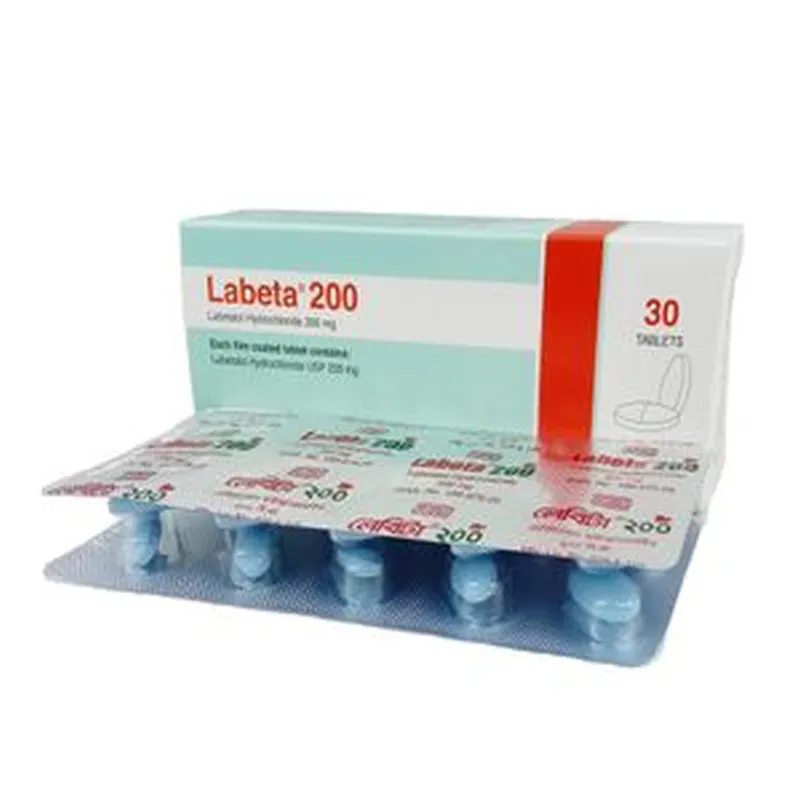
Labeta 200 - Tablet
Labetalol Hydrochloride - 200mg
10 Tablet(s) / Strip
Beximco Pharmaceuticals Ltd.
Introduction: Labeta 200 is a medicine used for treating high blood pressure (hypertension) and heart-related chest pain (angina). It is also effective for treating high blood pressure in pregnancy. It lowers the blood pressure and thus helps in preventing future stroke and heart attack. Labeta 200 may be used alone or in combination with other medicines. It should be taken with food. You can take it at any time of day but try to take it at the same time each day. Since it can cause serious withdrawal effects, it should not be stopped abruptly. Most people with high blood pressure...
Uses of Labeta 200: Hypertension (high blood pressure)Angina (heart-related chest pain)Prevention of heart attack and stroke
Side effects of Labeta 200: DizzinessAllergic reactionEjaculation disorderIncreased liver enzymesDifficulty in urination
How to use Labeta 200: Take this medicine in the dose and duration as advised by your doctor. Swallow it as a whole. Do not chew, crush or break it. Labeta 200 is to be taken with food.
How Labeta 200 works: Labeta 200 is an alpha and beta blocker. It works by slowing down the heart rate and relaxing blood vessels which makes the heart more efficient at pumping blood around the body.
Indication: Hypertension, Hypotensive anaesthesia
Administration: Should be taken with food. Take immediately after meals. IV Preparation Standard diluent: 500 mg/250 mL D5W Minimum volume: 250 mL D5W IV Administration Requires infusion pump Slow direct IV push administered over 2 minutes Loading infusions (2 mg/min) require close monitoring of HR and BP and are terminated after response occurs or a cumulative dose of 300 mg is reached Continuous infusions of 2-6 mg/hr have been used in some settings and should not be confused with loading infusions
Adult Dose: Oral Hypertension Adult: Initially, 100 mg bid, may increase gradually according to patients response to 200-400 mg bid. Max: 2.4 g/day in 2-4 divided doses. Elderly: Initially, 50-100 mg bid. Maintenance: 100-200 mg bid. Intravenous Emergency treatment of hypertension Adult: 20 mg injected slowly for at least 2 min, followed by 40-80 mg dose every 10 min, if necessary up to 300 mg. Patient should remain supine during and 3 hr after the procedure. Hypertension in pregnancy Adult: Start infusion at a rate of 20 mg/hr, doubled every 30 min until a satisfactory response is achieved or a dose of...
Child Dose: Hypertensive Emergency 0.4-1 mg/kg/hr by continuous IV infusion; not to exceed 3 mg/kg/hr
Contraindication: 2nd and 3rd degree heart block, cardiogenic shock, obstructive airway disease e.g. bronchial asthma, uncompensated heart failure, severe bradycardia, sick sinus syndrome, Prinzmetal's angina, severe peripheral arterial disease.
Mode of Action: Labetalol competitively inhibits the adrenergic stimulation of beta-receptors w/in the myocardium, bronchial and vascular smooth muscle, and alpha1-receptors w/in vascular smooth muscle. It also has some intrinsic beta2-agonist and membrane-stabilising activity.
Precaution: Phaeochromocytoma, compensated heart failure, nonallergic bronchospasm. Avoid abrupt withdrawal. DM. Hepatic impairment. Perform LFTs. Elderly. Pregnancy and lactation. Lactation: Small amounts excreted; use with caution
Side Effect: >10% Dizziness (1-20%),Lightheadedness (1-20%),Nausea (<19%),Tingling sensation of scalp (4-12%),Fatigue (1-11%) 1-10% Elevated serum blood urea nitrogen (BUN) (<8%),Elevated serum creatinine (8%),Congestion of nasal sinus (1-6%),Orthostatic hypotension (1-5%),Absence of ejaculation (<5%),Paresthesia (<5%),Elevated liver enzymes (4%),Diaphoresis (<4%),Edema (<2%),Bronchospasm (1-2%),Dyspnea (1-2%),Pruritus (1%),Rash (1%),Altered taste sense (1%),Ventricular arrhythmia (1%; IV) Frequency Not Defined Angioedema,Bradycardia,Alopecia,Cholestatic jaundice,Depression,Diabetes insipidus,Hepatitis,Raynaud syndrome,Toxic myopathy,Urinary retention,Urticaria,Raynaud phenomenon Potentially Fatal: Hepatic injury.
Interaction: Synergistic hypotensive effect w/ halothane. Increased absolute bioavailability w/ cimetidine. Decreased absolute bioavailability w/ glutethimide. Additive hypotensive effect w/ nitroglycerin. Increased incidence of tremor w/ TCAs. Increased risk of bradycardia and heart block w/ Ca channel blocker (e.g. verapamil, diltiazem).
|

No review yet!



LIVE SHOP
(0)
14680 Products
0%
Positive review