 English
 Bangla
 Arabic






















Details description |
|---|
|
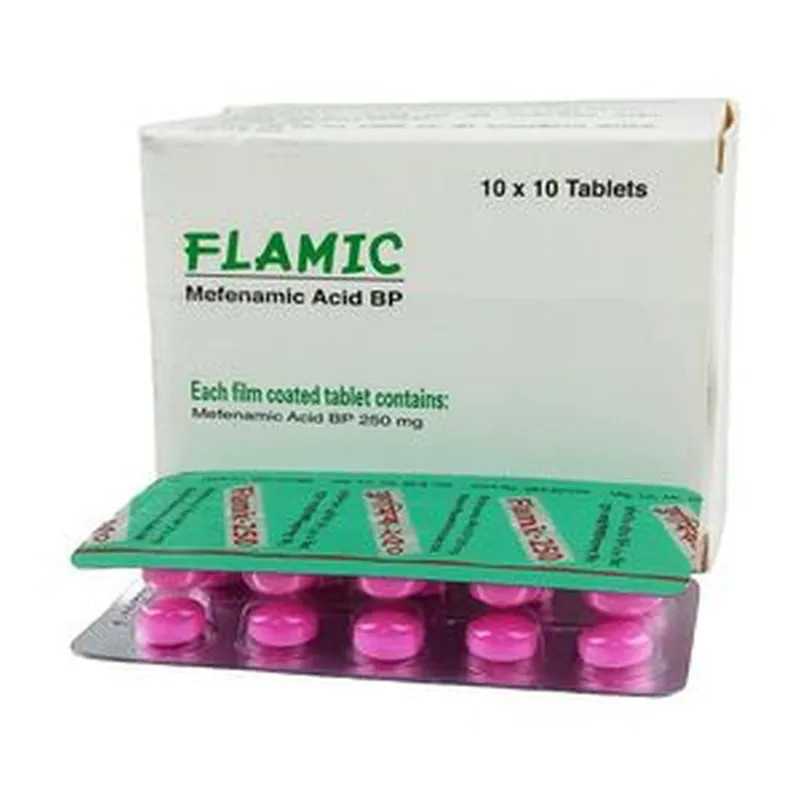
Flamic 250 - Tablet
Mefenamic Acid - 250mg
10 Tablet(s) / Strip
Globe Pharmaceuticals Ltd.
Introduction: Flamic 250 is used in the treatment of moderate to severe pain conditions like menstrual pain, headache, muscle pain, joint pain or dental pain. It effectively alleviates pain and inflammation. Flamic 250 should be taken with food. The dose and duration will depend on what you are taking it for and how well it helps your symptoms. You should keep taking the medicine even if you feel better until the doctor says it is alright to stop using it. The most common side effects of this medicine include mild vomiting, stomach pain, nausea, headache, and dizziness. If any of these...
Uses of Flamic 250: Pain relief
Side effects of Flamic 250: VomitingNauseaIndigestionDiarrheaLoss of appetite
How to use Flamic 250: Take this medicine in the dose and duration as advised by your doctor. Dissolve it in a glass of water before taking it. Flamic 250 is to be taken with food.
How Flamic 250 works: Flamic 250 is a non-steroidal anti-inflammatory drug (NSAID). It works by blocking the release of certain chemical messengers that cause fever, pain and inflammation (redness and swelling).
Indication: Rheumatoid arthritis, Osteoarthritis, Dysmenorrhoea, Menorrhagia, Dental pain, Pain and inflammation, Mild to moderate pain, Postoperative pain
Administration: Should be taken with food.
Adult Dose: Oral Rheumatoid arthritis; Mild to moderate pain; Dental pain; Postoperative pain; Dysmenorrhoea; Osteoarthritis; Menorrhagia Adult: 250-500 mg upto 3 times daily for 3-7 days. Max. 1.5 gm total.
Child Dose: Oral Rheumatoid arthritis; Mild to moderate pain; Dental pain; Postoperative pain; Dysmenorrhoea; Osteoarthritis; Menorrhagia Child: >6 mth 25 mg/kg daily in divided doses for up to 7 days.
Contraindication: Hypersensitivity to mefenamic acid, aspirin or other NSAIDs. Patient w/ inflammatory bowel disease, active ulceration or chronic inflammation of the upper or lower GI tract, renal failure. History of asthma, urticaria, allergic-type reactions. Treatment of perioperative pain in the setting of CABG surgery, pregnancy (3rd trimester), lactation. Coronary artery bypass graft surgery, severe renal impairment, severe heart failure.
Mode of Action: Mefenamic acid, an anthranilic acid derivative, is a prototypical NSAID. It reversibly inhibits the cyclooxygenase-1 and -2 (COX-1 and -2) enzymes, thus resulting in reduced synthesis of prostaglandin precursors. It has analgesic and antipyretic properties w/ minor anti-inflammatory activity.
Precaution: Patient w/ known CV disease or risk factors for CV disease, history of GI bleeding or peptic ulceration, fluid retention or heart failure. Renal and hepatic impairment. Anemia, bronchospasm, HTN, SLE, fluid retention, bleeding diathesis. Pregnancy and lactation. Patient Counselling May impair ability to drive or operate machinery. Monitoring Parameters Monitor CBC, chemistry profile, hepatic and renal function during long-term therapy. BP should be monitored closely during initiation and throughout therapy. Lactation: contraindicated; excreted in breast milk
Side Effect: >10% Borderline elevations of one or more LFTs (<15%) 1-10% Abdominal pain,Anorexia,Diarrhea,Nausea,Pyrosis,Gastritis,Flatulence,Constipation,Steatorrhea,Upper GI ulcers, gross bleeding/perforation (1% of patients treated for 3-6 mth and 2-4% of those treated for 1 yo) <1% Leukopenia,Eosinophilia,Thrombocytopenic purpura,Agranulocytosis,Pancytopenia,Bone marrow hypoplasia,Renal failure (including papillary necrosis & acute interstitial nephritis),Acute interstitial nephritis has been associated with hematuria, proteinuria, & nephrotic syndrome Potentially Fatal: Autoimmune haemolytic anaemia; convulsions (overdosage).
Pregnancy Category Note: Pregnancy Category: C; D in 3rd trimester or near delivery.
Interaction: Concomitant use w/ CYP2C9 isoenzyme inhibitors may alter safety and efficacy of mefenamic acid. May enhance methotrexate toxicity. Reduced BP response to ACE inhibitors or angiotensin II receptor antagonists. Increased risk of serious GI events w/ aspirin. May reduce the natriuretic effects of furosemide or thiazide diuretics. Reduced renal lithium clearance and elevated plasma lithium levels. May enhance anticoagulant effect of warfarin.
|

No review yet!




LIVE SHOP
(0)
14680 Products
0%
Positive review