 English
 Bangla
 Arabic




















Details description |
|---|
|
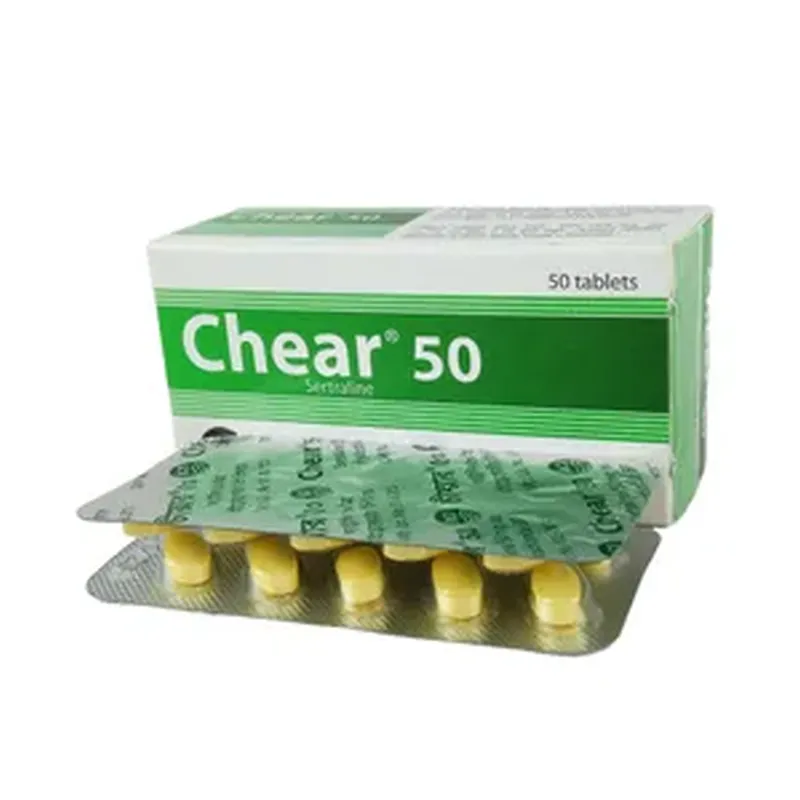
Chear 50 - Tablet
Sertraline Hydrochloride - 50mg
10 Tablet(s) / Strip
ACI Limited
Introduction: Chear 50 is a type of antidepressant belonging to the selective serotonin reuptake inhibitor (SSRI) group of medicines. It is prescribed for depression and anxiety-related conditions like panic disorder, obsessive-compulsive disorder, and post-traumatic stress disorder (PTSD). Chear 50 is also used to treat premenstrual dysphoric disorder (depression and irritability before menstrual period in women). It can be taken with or without food. The dose and how often you need it will be decided by your doctor so that you get the right amount to control your symptoms. Your doctor may start you on a lower dose and increase it gradually....
Uses of Chear 50: DepressionPost traumatic stress disorderObsessive-compulsive disorderPanic disorderPremenstrual dysphoric disorderAnxiety
Side effects of Chear 50: Delayed ejaculationErectile dysfunctionIndigestionInsomnia (difficulty in sleeping)Low sexual desireNauseaTremorDiarrheaIncreased sweatingLoss of appetite
How to use Chear 50: Take this medicine in the dose and duration as advised by your doctor. Swallow it as a whole. Do not chew, crush or break it. Chear 50 may be taken with or without food, but it is better to take it at a fixed time.
How Chear 50 works: Chear 50 is a selective serotonin reuptake inhibitor (SSRI) antidepressant. It works by increasing the levels of serotonin, a chemical messenger in the brain. This improves mood and physical symptoms of depression and also relieves symptoms of post traumatic stress disorder, obsessive-compulsive disorder, panic disorder, premenstrual dysphoric disorder and anxiety.
What if you forget to take Chear 50?: If you miss a dose of Chear 50, take it as soon as possible. However, if it is almost time for your next dose, skip the missed dose and go back to your regular schedule. Do not double the dose.
Indication: Major Depressive illness, Panic disorder, Premenstrual dysphoric disorder, Post-traumatic stress disorder, Obsessive-compulsive disorder, Social anxiety disorder
Administration: May be taken with or without food.
Adult Dose: Oral Major Depressive Disorder; Obsessive compulsive disorder Adult: Initially, 50 mg daily, may increase in increments of 50 mg at wkly intervals. Max: 200 mg daily. Panic disorder with or without agoraphobia; Posttraumatic stress disorder; Social anxiety disorder Adult: Initially, 25 mg daily, increased to 50 mg daily after a wk. May increase in increments of 50 mg at wkly intervals. Max: 200 mg daily. Premenstrual dysphoric disorder Adult: Initially, 50 mg daily, either throughout the menstrual cycle or during the luteal phase only. May increase in increments of 50 mg per menstrual cycle. Max: 150 mg daily (for continuous...
Child Dose: Oral Obsessive compulsive disorder Child: 6-12 yr Initially, 25 mg once daily; 13-17 yr Initially, 50 mg once daily. May increase at intervals of at least 1 wk. Max: 200 mg daily.
Renal Dose: Renal impairment: Dose adjustment not necessary
Contraindication: Sertraline is contraindicated in patients with a known hypersensitivity to Sertraline or any of the excipients of drug. Concurrent use or w/in 14 days of discontinuation of MAOIs (e.g. linezolid or IV methylene blue). Concomitant use w/ pimozide.
Mode of Action: Sertraline has a potent and selective inhibitory action on CNS neuronal reuptake of 5-HT resulting in increased 5-HT concentrations at the synaptic clefts, leading to sustained activity at the postsynaptic receptor sites and improvement of depression. Reduction of serotonin turnover (in brain) also contributes to its action. Its long half-life allows once daily admin.
Precaution: Patient w/ family history of bipolar disorder, mania or hypomania; previous seizure disorder or condition predisposing to seizures (e.g. alcoholism, brain damage); angle-closure glaucoma or history of glaucoma; risk factors for uric acid nephropathy, QTc prolongation. Patient w/ concurrent systemic illness (e.g. conditions that affect metabolism or haemodynamic process). Avoid abrupt withdrawal. Renal and hepatic impairment. Childn. Pregnancy and lactation. Monitoring Parameters Monitor BMI (longitudinal monitoring), height, wt, unusual behavioural changes, signs and symptoms of serotonin syndrome. Lactation Distributed into milk; use caution (AAP states effect on nursing infants is unknown but may be of concern)
Side Effect: >10% Diarrhea (13-24%),Nausea (13-30%),Headache (20-25%),Insomnia (12-28%),Ejaculation disorder (7-19%),Dizziness (6-17%),Dry mouth (6-16%),Fatigue (10-16%),Drowsiness (2-15%) 1-10% Agitation (1-6%),Anorexia (5-10%),Anxiety (4%),Constipation (5-8%),Paresthesia (2%),Impotence (5-10%),Sweating (< 1%),Malaise (7-9%),Vomiting (4%),Pain (3-6%) Frequency Not Defined Asthenia,Back pain,Chest pain,Hypoesthesia,Increased appetite,Myalgia,Palpitations,Rhinitis,Tinnitus,Weight gain,Yawning
Interaction: May increase risk of delirium when used with antimuscarinics. Increased risk of extrapyramidal symptoms and neuroleptic malignant syndrome when used with aripiprazole. Serum levels may be reduced by carbamazepine. Concurrent use with dihydroergotamine or linezolid may lead to serotonin syndrome. May increase serum levels of lamotrigine and risk of toxicity. May increase serum levels of olanzapine, pimozide, risperidone, methadone, clozapine and amiodarone. Plasma levels may be increased by cimetidine and ritonavir. May increase the anticoagulant activity of warfarin and acenocoumarol. Potentially Fatal: Concomitant admin with MAOIs can result in serious serotonin syndrome.
|

No review yet!




LIVE SHOP
(0)
14680 Products
0%
Positive review