English
 Bangla
 Arabic






















Details description |
|---|
|
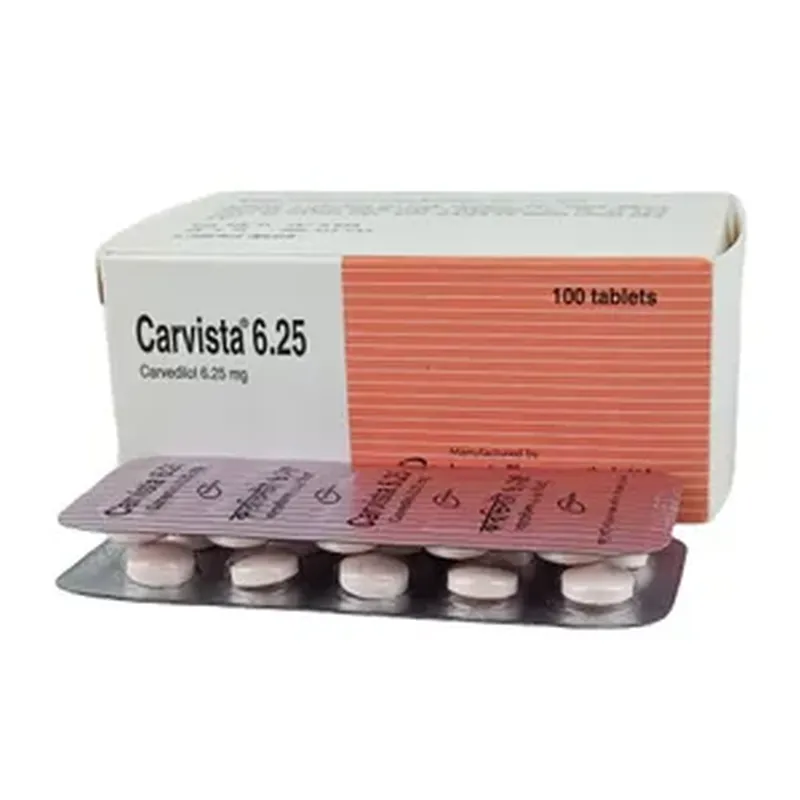
Carvista 6.25 - Tablet
Carvedilol - 6.25mg
10 Tablet(s) / Strip
Incepta Pharmaceuticals Ltd.
Introduction: Carvista 6.25 is a medicine used to treat high blood pressure, heart related chest pain (angina) and heart failure. It works by relaxing the blood vessels, so blood can flow more easily to the heart. Lowering blood pressure helps to prevent future heart attack and stroke. Carvista 6.25 should be taken with food. You should take it in the dose and duration as advised by the doctor. It is important to take it even if you feel well or if your blood pressure is controlled. You should not stop this medicine without talking to the doctor as your condition could...
Uses of Carvista 6.25: Hypertension (high blood pressure)Angina (heart-related chest pain)Heart failure
Side effects of Carvista 6.25: Decreased blood pressureHeadacheFatigueDizziness
How to use Carvista 6.25: Take this medicine in the dose and duration as advised by your doctor. Swallow it as a whole. Do not chew, crush or break it. Carvista 6.25 is to be taken with food.
How Carvista 6.25 works: Carvista 6.25 is an alpha and beta blocker. It works by slowing down the heart rate and relaxing blood vessels which makes the heart more efficient at pumping blood around the body.
Indication: Hypertension, Congestive heart failure, Myocardial infarction, Left ventricular dysfunction, Angina pectoris
Administration: Should be taken with food.
Adult Dose: Congestive Heart Failure Immediate release 3.125 mg PO q12hr for 2 weeks, then increased every 2 weeks as tolerated to 6.25 mg, 12.5 mg, or 25 mg PO twice daily Maximum recommended dosage (mild-to-moderate heart failure): 85 kg: 50 mg PO twice daily Maximum recommended dosage (severe heart failure): 25 mg PO twice daily Extended release 10 mg/day PO; maintained for 1-2 weeks if tolerated; may be increased to 20 mg/day, 40 mg/day, or 80 mg/day PO if necessary Hypertension Immediate release: 6.25 mg PO twice daily initially; after 7-14 days, increased as tolerated, first to 12.5 mg PO twice...
Child Dose: Safety and efficacy not established
Renal Dose: Renal impairment: No dosage adjustments necessary
Contraindication: Hypersensitivity; severe chronic heart failure, bronchial asthma or related bronchospastic conditions; severe hepatic impairment. Patients with NYHA class IV cardiac failure, 2nd or 3rd ° AV block, sick sinus syndrome (unless a permanent pacemaker is in place), cardiogenic shock or severe bradycardia. Lactation.
Mode of Action: Carvedilol is a nonselective beta-adrenoreceptor and alpha-adrenergic blocking activity. It exerts antihypertensive effect partly by reducing total peripheral resistance and vasodilation.
Precaution: Avoid abrupt withdrawal as it may precipitate thyroid storm or exacerbate hyperthyroidism. Liver injury; vascular disease, renal failures, suspected phaeochromocytoma and prinzmetal's variable angina; worsening cardiac failure or fluid retention during increase in dosage of carvedilol; diabetic patients. Pregnancy. Lactation: Unknown whether drug is excreted in milk; not recommended
Side Effect: >10% Dizziness (2-32%),Fatigue (4-24%),Hypotension (9-20%),Weight gain (10-12%),Hyperglycemia (5-12%),Diarrhea (1-12%) 1-10% Bradycardia (2-10%),Nausea (2-9%),Cough (5-8%),Headache (5-8%),Atrioventricular block, edema (1-7%),Angina (1-6%),Hpercholesterolemia (1-4%),Hypertriglyceredemia (1%),Vomiting (1-6%),Dyspnea (>3%),Syncope (3%),Rhinitis (2%) Frequency Not Defined Hypertension,Palpitations,Insomnia,Somnolence,Skin rash,Hepatotoxicity,Impotence,Bronchospasm,Rales,Depression,Decreased exercise tolerance,Raynaud phenomenon,Increased triglyceride levels and insulin resistance with decreased high-density lipoprotein (HDL) levels
Pregnancy Category Note: Pregnancy Available data in pregnant women are insufficient to determine whether there are drug-associated risks of adverse developmental outcomes; there are risks to mother and fetus associated with poorly controlled hypertension in pregnancy; the use of beta blockers during third trimester of pregnancy may increase risk of hypotension, bradycardia, hypoglycemia, and respiratory depression in neonates; in animal reproduction studies, there was no evidence of adverse developmental outcomes at clinically relevant doses; observe newborns for symptoms of hypotension, bradycardia, hypoglycemia, and respiratory depression and manage accordingly Hypertension in pregnancy increases maternal risk for pre-eclampsia, gestational diabetes, premature delivery, and delivery complications...
Interaction: Decreased serum levels w/ rifampicin. Combination w/ Ca channel blockers (e.g. verapamil and diltiazem) can lead to bradycardia and myocardial depression. Potentiates insulin-induced hypoglycaemic action. May increase hypoglycaemic effects of antidiabetic agents. Increased risk of bradycardia w/ digoxin. Increased risk of hypotension and bradycardia w/ reserpine, MAOIs, clonidine. May increase ciclosporin concentrations. Concurrent use w/ ether, cyclopropane, trichloroethylene may increase the risk of hypotension and heart failure.
|

No review yet!




LIVE SHOP
(0)
14680 Products
0%
Positive review